What Is a Failed Dental Restoration?
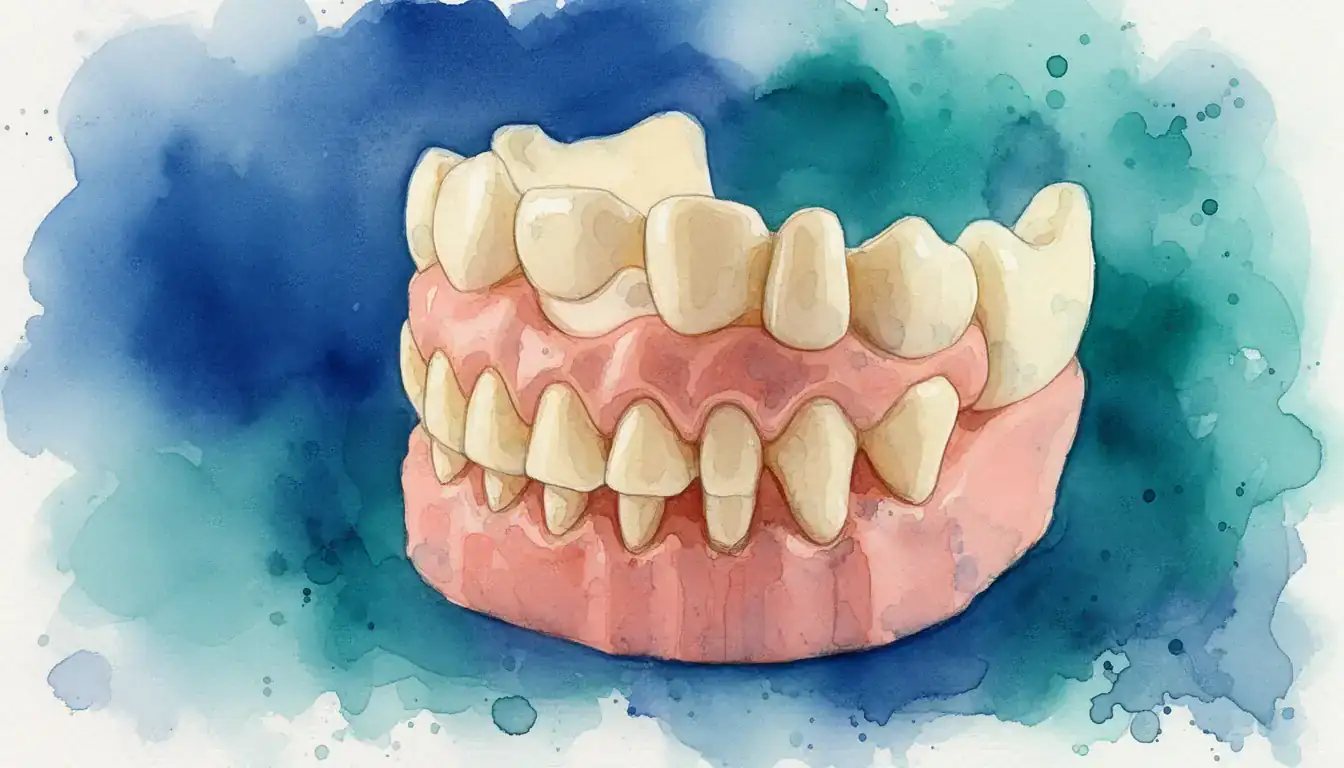
A failed dental restoration is any crown, bridge, veneer, inlay, onlay, or filling that no longer protects or functions as intended. Failure can be biological (decay, gum disease, nerve death) or mechanical (fracture, debonding, wear). Either way, the restoration must be evaluated and usually replaced.
Restorations are common, and so are their failures. A 2020 systematic review of monolithic ceramic crowns reported 5-year survival rates between roughly 92.5% and 100%, with risk rising in patients who grind their teeth or have multiple restorations in the same arch.[2] Composite fillings, the most common direct restoration, show a median annual failure rate around 1 to 3% depending on size and patient risk.[5]
Failure does not always mean an emergency. Many restorations decline slowly. The goal of a prosthodontic evaluation is to catch failure early, identify the cause, and rebuild in a way that addresses the original problem rather than repeating it.
Why Restorations Break Down
Restorations fail for biological, mechanical, and patient-related reasons. Most failures involve more than one cause working together over years. Understanding the cause matters because the fix depends on it.
Biological Causes
Recurrent decay at the margin (where the restoration meets the tooth) is the most common reason crowns and fillings fail.[5] Plaque collects at this seam, especially if the margin is rough, open, or below the gumline. Acid from bacteria slowly dissolves the tooth structure under the restoration.
Pulp (nerve) death can also occur years after a crown is placed. A long-term study found that about 13.3% of teeth required root canal treatment within 10 years of crown placement, even when the tooth was vital at the time of crowning.[3]
Mechanical Causes
Restorations also fail from physical stress. Porcelain can chip, zirconia can fracture, metal frameworks can flex, and connectors on bridges can break. Bruxism, the repetitive clenching and grinding of teeth, multiplies these forces and is one of the strongest predictors of mechanical failure in fixed prosthodontics.[6]
- Bruxism and clenching, which load restorations far beyond normal chewing[6]
- Bite (occlusal) imbalance that concentrates force on a single restoration
- Fracture of the underlying tooth, especially after root canal treatment
- Debonding of veneers or onlays from saliva contamination or aging cement
Patient and Design Factors
Some failures trace back to the original treatment plan or to factors the patient can influence. Combined tooth-and-implant supported bridges, for example, carry higher technical complication rates than implant-only or tooth-only designs.[8] Smoking, uncontrolled diabetes, and poor home care also raise the risk of decay and gum disease around restorations.
- Smoking and uncontrolled diabetes
- Inconsistent brushing, flossing, or hygiene visits
- High-sugar or high-acid diets
- Bridge or implant designs that mix tooth and implant supports[8]
Symptoms and Diagnosis
A failing restoration often signals trouble before it breaks. Early symptoms are subtle: a small twinge with cold drinks, a rough edge the tongue catches, or a persistent food trap between teeth. Pain usually means failure is advanced.
Patients should seek care if they notice a chipped or cracked restoration, a loose crown that rocks, a lingering bad taste near a restored tooth, swelling or a pimple on the gum, or sensitivity that lasts more than a few seconds after a temperature change. A loose bridge or a veneer that has come off should be brought in still attached, if possible, since intact pieces can sometimes be re-bonded as a temporary measure.
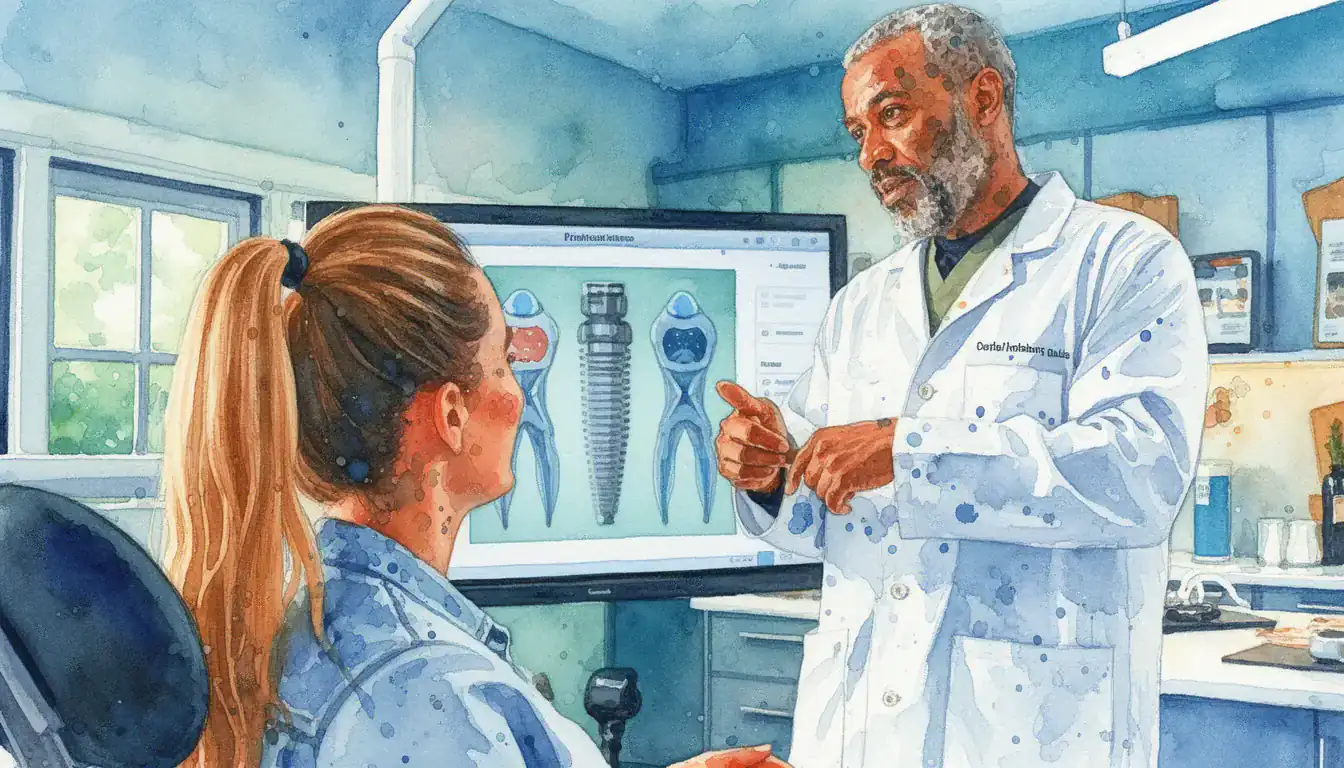
Diagnosis combines clinical examination with imaging. A prosthodontist checks the bite, probes the margins, and tests the tooth's nerve response. Bitewing and periapical X-rays reveal hidden decay and bone loss. In complex cases, cone beam CT (a 3D scan) shows fracture lines and the condition of the supporting bone. A joint position statement from the American Association of Endodontists and the American Academy of Oral and Maxillofacial Radiology supports limited field-of-view CBCT for diagnosing suspected vertical root fractures and for evaluating the bone around teeth and implants.[10]
How Failed Restorations Are Treated
Treatment depends on what failed and why. The choices range from polishing and re-cementing to full replacement with a new restoration or a dental implant. A prosthodontist weighs how much sound tooth remains, the patient's bite forces, and long-term goals before recommending a path.
Repair or Re-Cement
When the underlying tooth is healthy and the restoration is intact, repair is the most conservative option. A debonded veneer can sometimes be re-bonded. A small porcelain chip on a crown can be smoothed or patched with composite. Re-cementing a loose crown is reasonable only if the inside surfaces are clean and the margins still seal.
Replacement With a New Restoration
Most failed crowns, bridges, and veneers need replacement. The prosthodontist removes the old restoration, treats any decay or nerve problem, and rebuilds the tooth's foundation before taking new impressions or digital scans. Material choice often changes: a fractured porcelain-fused-to-metal crown may be replaced with monolithic zirconia, which has higher flexural strength and resists chipping under heavy bite force. A systematic review of monolithic zirconia crowns reported 5-year survival around 97% with low rates of veneer chipping compared with porcelain-veneered designs.[12]
- All-ceramic or zirconia crowns for single-tooth replacement[12]
- Lithium disilicate veneers for front-tooth esthetics
- Fixed bridges when adjacent teeth are already heavily restored
- Removable partial dentures when several teeth need replacement
Dental Implant Replacement
When the underlying tooth cannot be saved, a dental implant is often the most predictable long-term option. A 2019 systematic review reported a pooled 5-year implant survival rate of about 98.6% in healthy patients, while a 2022 review confirmed strong long-term survival but flagged peri-implantitis and mechanical complications as meaningful risks.[1][7] Zirconia implants are an emerging metal-free alternative with comparable short-term survival, but long-term data are still limited.[4]
Managing the Underlying Cause
Replacing a restoration without addressing why it failed often leads to a repeat failure. A patient with documented bruxism typically needs an occlusal guard.[6] Recurrent decay calls for fluoride therapy, dietary changes, and tighter recall intervals. Periodontal disease must be controlled before any new prosthetic work is started.
Recovery and Aftercare
Recovery from a restoration replacement is usually short. Most patients return to normal eating within a day or two, with mild gum tenderness and temperature sensitivity that fades over one to two weeks. Implant-based replacements take longer, since the implant must integrate with bone (osseointegration) over roughly 3 to 6 months before the final crown is placed.[9]
The new restoration is not the end of treatment. Daily flossing or interdental brushes around the margins, twice-yearly cleanings, and a nightguard for grinders all extend the life of the work. Patients should report any new sensitivity, a high spot in the bite, or food packing between teeth promptly. Small adjustments early prevent fracture later.
Long-term follow-up is especially important after complex prosthodontic work. Prosthodontists often recommend an examination at least every 6 months for patients with multiple restorations, with X-ray intervals based on individual risk for decay and gum disease. Patient resources from the American College of Prosthodontists outline the maintenance routine for crowns, bridges, and implant-supported work.[11]
Cost and Insurance Coverage
The cost of replacing a failed restoration depends on the type, the material, and the work needed underneath. Costs vary by location, provider, and case complexity. A single replacement crown typically falls in the range of roughly $1,000 to $2,500. A three-unit bridge often runs $3,000 to $6,000. A single-tooth implant with crown commonly totals $3,000 to $6,000 or more when grafting is required.
Most dental insurance plans cover crown and bridge replacement at 50%, but only after a benefit interval (often 5, 7, or 8 years from the original placement). Replacement before that interval, or replacement of a restoration the same insurer did not pay for, may be denied. Patients should request a written pre-treatment estimate before scheduling.
Many practices offer in-house payment plans or third-party financing such as CareCredit. Health savings accounts (HSAs) and flexible spending accounts (FSAs) can be used for most prosthodontic care.
Prosthodontist or General Dentist?
A general dentist can replace many straightforward crowns and fillings. A prosthodontist is the dental specialist with three additional years of training focused specifically on rebuilding teeth and replacing missing teeth. The American Dental Association recognizes prosthodontics as one of the dental specialties.[13]
Referral to a prosthodontist makes sense when restorations keep failing in the same patient, when multiple teeth need to be rebuilt at once, when bite or jaw problems complicate the case, or when implants are being combined with crowns and bridges. Prosthodontists also handle full-mouth reconstruction, complex esthetic cases on the front teeth, and dentures or implant-supported prostheses for patients who have lost most of their teeth.
Find a Prosthodontist Near You
If a crown, bridge, or veneer is failing, a prosthodontist can identify the cause and rebuild the tooth so the next restoration lasts longer. Learn more on the prosthodontics page or use the directory to find a board-certified prosthodontist in your area.
Search Prosthodontists in Your Area