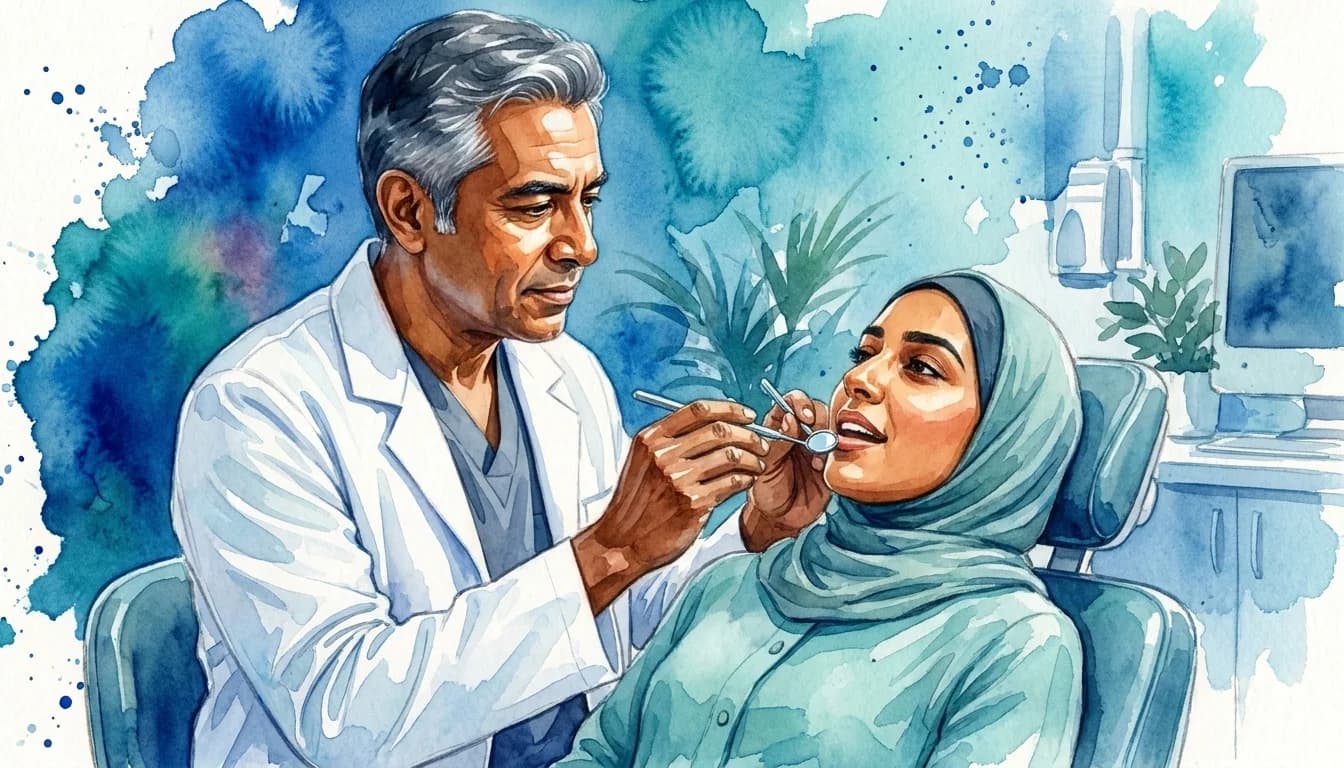
What a Dental Bone Graft Is and Why It Is Done
A dental bone graft is a procedure that adds bone material to your jaw so it can support a tooth or a dental implant. This type of oral surgery rebuilds dental bone that has shrunk, broken down, or never fully formed.
Your jaw needs enough bone to hold teeth and to anchor dental implants. When a tooth is removed, the dental bone around the empty socket often starts to shrink. A dental bone graft fills that space with graft material that acts as a scaffold. Over time, your own cells grow into the graft material and turn it into living bone tissue, a process called bone integration.
The graft material can come from a few sources. It may be your own bone, donated human bone, processed animal bone, or a synthetic material. A small repair right after a tooth removal is called a socket graft. A larger repair that rebuilds a wide area of missing jaw is often a block bone graft, where a solid piece of graft material is fixed in place. People often search online for failed dental bone graft healing pictures to compare these repairs with their own healing process.
Most dental bone graft procedures heal without trouble. Still, it helps to know the difference between normal healing and the signs of dental bone graft failure. That way you can act early if something does not look right.
When a Dental Bone Graft Is Recommended, and Why Grafts Fail
A dental bone graft is recommended when the jaw has lost bone and needs more support before a tooth replacement or dental implants can succeed.
Several problems lead to bone loss. Untreated gum disease is a leading cause, because the infection slowly destroys the dental bone and gum tissue that hold teeth in place.[1] Tooth removal, injury, long-term denture wear, and infection around a tooth root can also thin the bone.
- Saving the socket right after a tooth is pulled, using a socket graft to limit bone loss
- Rebuilding the height or width of the jaw with a block bone graft before dental implants
- Repairing dental bone destroyed by gum disease[1]
- Lifting and supporting bone in the upper jaw before implants are placed
Why a Dental Bone Graft Fails
A dental bone graft fails when the graft material does not turn into stable bone. The most common reason is a problem with blood clot formation. After surgery, healthy blood clot formation seals the graft site and brings in the cells that healing needs. If that blood clot breaks down or never forms, the graft material can loosen and wash away.
Other things raise the risk of graft failure. Smoking narrows blood vessels and starves the graft material of oxygen. Infection, often the same bacteria that drive gum disease, can attack the site.[1] Pressure from chewing, a loose stitch, or movement of the graft can also disturb healing. Sometimes the body simply does not accept the graft material.
- Smoking or vaping during the healing process
- Poorly controlled diabetes or other health conditions
- Active gum disease or infection[1]
- Disturbing the graft site with your tongue, fingers, or hard food
- Not following oral surgery aftercare instructions
What to Expect During a Dental Bone Graft
A dental bone graft usually takes one visit for the oral surgery, followed by months of healing while the graft material slowly becomes your own bone.
Before the Procedure
Your provider examines your mouth and takes X-rays or a 3D scan to measure the dental bone. They review your health history and the medicines you take. You will get clear instructions about eating, smoking, and arranging a ride if you will be sedated. This is a good time to ask how they will track your healing and what dental bone graft failure would look like in your case.
During the Procedure
The area is numbed with local anesthesia. For larger oral surgery, you may also receive sedation. The provider opens the gum, cleans the area, and places the graft material. A socket graft after a tooth removal is quick. A larger repair takes longer because a solid piece of graft material is fixed into place. A protective membrane and stitches cover the graft material to shield it and support blood clot formation.
After the Procedure
You will bite on gauze to help blood clot formation. Some bleeding, swelling, and soreness are normal at first. Your provider explains how to protect the graft site, which foods to avoid, and how to keep your mouth clean. Follow these steps closely, because the first days set up the healing that makes the bone graft hold.
Recovery Timeline and Healing Milestones
Most dental bone graft recovery follows a steady path. Swelling and soreness fade within about a week, while full bone integration takes roughly three to six months.
- Day 1: Expect some bleeding, swelling, and soreness. A little graft material in your saliva can be normal. Rest, and avoid spitting or drinking through a straw, which can disturb the blood clot.
- Week 1: Swelling usually peaks around day two or three, then eases. Pain should slowly improve. This is normal healing. Eat soft foods and keep the area clean.
- Month 1: The gum closes over the area, and soreness is usually gone. The graft material is quietly turning into bone underneath.
- Months 3 to 6: Bone integration finishes. Your provider checks with an X-ray to confirm the dental bone is strong enough for dental implants.
What Is Normal and When to Call the Office
Knowing the difference between calm, expected healing and real trouble protects your dental bone graft. The signs below are typical and usually fine.
These are the changes people hope to spot when they look up failed dental bone graft healing pictures. Photos online cannot diagnose your mouth. If you notice these signs, contact a dental professional promptly.[2] They may need to clean the graft site, treat an infection, or plan a surgical intervention to repair or redo the graft.
- Typical: mild to moderate swelling for two to three days
- Typical: light oozing and a small amount of graft material in your saliva
- Typical: soreness that slowly fades over one to two weeks
- Call the office: pain that grows worse after day three instead of better
- Call the office: severe pain that medicine does not control
- Call the office: large amounts of graft material falling out
- Call the office: a bad taste, pus, or a foul smell, which can signal infection
- Call the office: exposed bone you can see or feel through the gum
- Call the office: swelling or bleeding that will not stop
Cost, Insurance, and Financing
A dental bone graft in the United States usually costs from several hundred to a few thousand dollars, depending on the size and type of graft.
A simple graft placed at the time of a tooth removal usually sits at the lower end. A larger graft, donor bone, or a graft that needs more oral surgery costs more. Costs vary by location, provider, and case complexity.
Dental insurance may cover part of a bone graft when it is medically needed, such as after an injury or to treat damage from gum disease.[1] Coverage for grafts done mainly to prepare for dental implants is less predictable. Read your plan or ask the office to check your benefits before treatment.
Many offices offer payment plans, in-house membership savings, or third-party financing. Ask what options exist so cost does not delay the graft your treatment plan requires.
Specialist Care Versus a General Dentist
A periodontist or oral surgeon usually performs complex dental bone graft procedures, while a general dentist may handle a simple graft after a tooth removal.
Periodontists are specialists in the gums and dental bone that support teeth.[1] They train for extra years after dental school in treating gum disease, placing dental implants, and rebuilding lost bone. For a failed dental bone graft, a tricky case, or a redo, that added training matters. You can learn more on the periodontics page.
A general dentist can place and watch a simple bone graft, then refer you to a specialist if healing stalls or a surgical intervention is needed. If you already see signs of dental bone graft failure, ask for a referral to a periodontist or oral surgeon without delay.
Find a Periodontist Near You
If you are worried about how your dental bone graft is healing, or you want a specialist to plan your graft and future dental implants, My Specialty Dentist can help. Use our directory to find a periodontist near you who treats dental bone problems and guides patients through the healing process. Compare specialists, read about their training, and book a visit when you feel ready.
Search Periodontists in Your Area