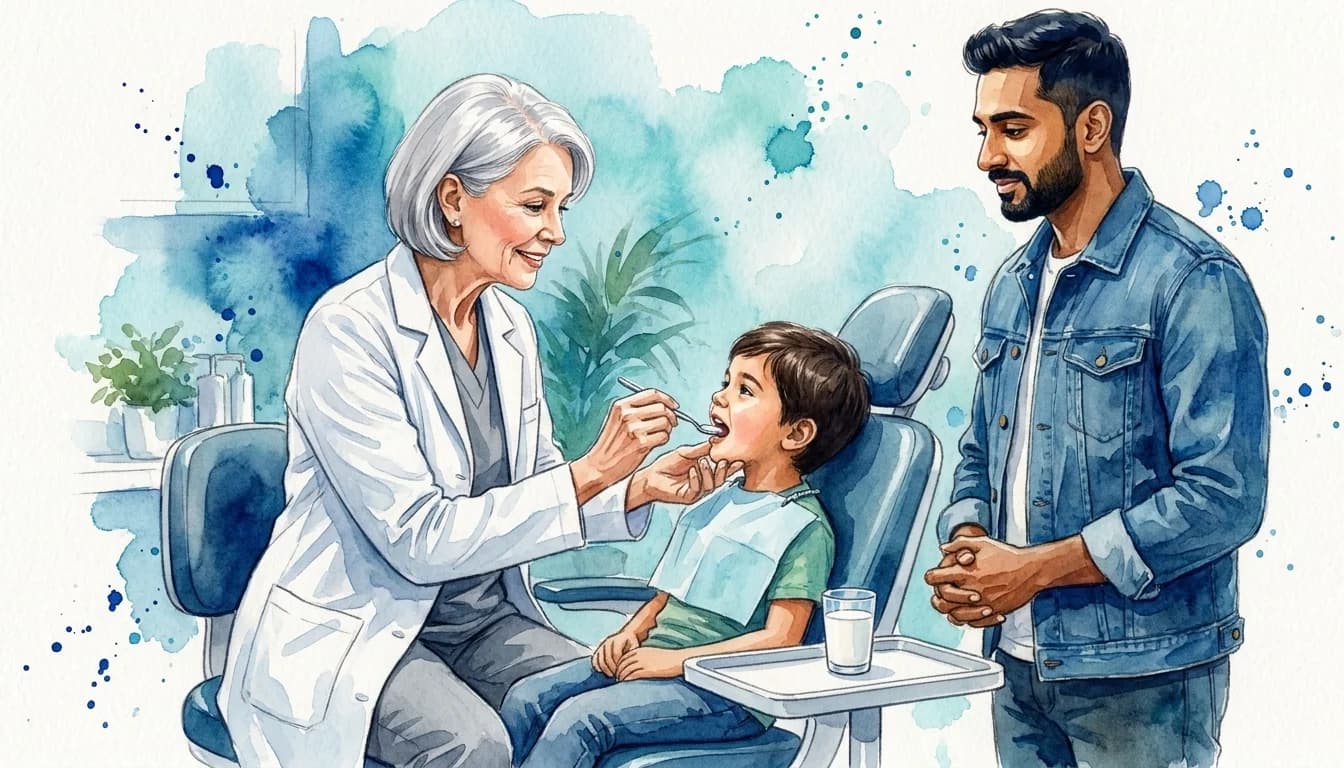
What Is Baby Bottle Tooth Decay?
Baby bottle tooth decay is severe cavity formation in the baby teeth of infants and toddlers, caused by frequent or prolonged exposure to sugary liquids [6][9]. Dentists also call it early childhood caries (ECC) or nursing caries.
The condition is one of the most common chronic diseases of early childhood. Research describes it as a rapidly progressing form of decay that can affect multiple teeth within months of eruption [6][7]. A systematic review of feeding practices found that prolonged bottle use and night-time feeding are consistently linked to higher caries risk in young children [2].
Although the name suggests bottles are the only cause, the same pattern of decay can develop from any frequent sugar exposure, including sippy cups, juice pouches, and on-demand night-time breastfeeding after the first year [1][2]. The biological problem is the same: sugar sitting on teeth for long periods feeds acid-producing bacteria.
Without treatment, baby bottle tooth decay can cause pain, infection, and early tooth loss. It can also affect speech development and the eruption pattern of permanent teeth [6][10].
Causes and Risk Factors
Baby bottle tooth decay develops when teeth are exposed to fermentable sugars for long stretches and oral bacteria convert those sugars into acid that demineralizes enamel [5][9]. Several feeding and care patterns increase risk.
Feeding Patterns
The strongest risk factor is putting a child to bed with a bottle that contains anything other than water. During sleep, saliva flow drops, so sugars pool around the teeth for hours [5][10].
Frequent daytime sipping from a bottle or sippy cup also raises risk. Each sip resets the acid attack on enamel. Research on infants 13 to 18 months old found that feeding practices, including extended bottle use, were associated with early caries development [1].
Prolonged on-demand breastfeeding at night, after teeth have erupted, has also been linked to caries in some studies, though evidence is mixed [2]. The American Academy of Pediatric Dentistry encourages parents to discuss night-time feeding patterns with their child's dentist [11].
Bacteria and Transmission
Cavity-causing bacteria, mainly <em>Streptococcus mutans</em>, can transfer from caregiver to child through shared spoons, pacifiers cleaned in the mouth, or pre-chewed food [5][9]. Early colonization is one driver of aggressive decay in toddlers.
Caregivers with untreated cavities have higher bacterial loads, which increases the risk of transmission to a child [9].
Enamel and Health Factors
Some children are born with thin or poorly mineralized enamel, a condition called enamel hypoplasia. These teeth are more vulnerable to decay, and research has proposed hypoplasia-associated severe early childhood caries as a distinct subtype [3].
Other risk factors include low fluoride exposure, limited access to dental care, and behavioral patterns such as frequent snacking on sticky carbohydrates [4][5].
Symptoms and Diagnosis
Parents often notice baby bottle tooth decay as discolored spots on the upper front teeth, but a dentist confirms the diagnosis with a clinical exam and, when needed, X-rays [7][9].
The earliest sign is a chalky white band or spots along the gum line of the upper front teeth. This is demineralized enamel and can sometimes be reversed with fluoride if caught early [7].
As decay progresses, the spots turn yellow, brown, or black. Teeth may develop visible cavities, chip, or break. Children may complain of pain when eating cold or sweet foods, or refuse to eat [6][10]. Swelling of the gums, an abscess, or fever signals infection and needs prompt care.
A systematic review of diagnostic criteria for early childhood caries found that visual examination remains the primary tool, supported by radiographs for hidden lesions between teeth [7]. Parents should seek a dental evaluation as soon as they notice any color change on a baby tooth, or by the child's first birthday at the latest [11].
Treatment Options
Treatment depends on how far the decay has progressed and the child's age and ability to cooperate during dental procedures [6][10]. Options range from preventive therapy for early lesions to restorations or extractions for advanced disease.
Fluoride and Remineralization
For white-spot lesions that have not yet broken through the enamel, dentists often apply professional fluoride varnish and recommend a fluoride toothpaste at home [10]. Silver diamine fluoride may also be used to arrest active decay on baby teeth without drilling, especially in very young children.
These approaches can stop progression in many cases when paired with changes to feeding and hygiene habits [5][11].
Fillings and Crowns
Once decay has formed a cavity, the affected tissue must be removed and the tooth restored. Small cavities are typically filled with tooth-colored composite or glass ionomer [10].
When decay is more extensive on baby molars or front teeth, dentists often place stainless steel or tooth-colored crowns to rebuild the tooth and prevent further breakdown. Crowns hold the space until the permanent tooth erupts.
Pulp Therapy and Extraction
If decay reaches the nerve, the child may need pulp therapy, sometimes called a baby root canal, followed by a crown [10]. This preserves the tooth and avoids early loss.
When a tooth cannot be saved, extraction is the safest option. A space maintainer may be placed to hold room for the adult tooth. Severe cases involving multiple teeth are sometimes treated under sedation or general anesthesia for safety and comfort. Parents should discuss the risks and benefits of each setting with a pediatric dentist [11].
Recovery and Aftercare
Most children recover quickly after dental treatment for baby bottle tooth decay, but follow-up care and home habits decide whether decay returns [10][11].
After fluoride or silver diamine fluoride, no downtime is needed. After fillings, crowns, or extractions, children may be sore for a day or two and should stick to soft foods. If sedation was used, expect drowsiness for several hours and follow the dental team's instructions for monitoring at home.
Long-term aftercare is the more important part. Parents should brush the child's teeth twice a day with a smear of fluoride toothpaste under age three and a pea-sized amount from ages three to six [12]. Bottles should not be used as a sleep tool, and juice should be limited.
Follow-up visits every three to six months are common after a diagnosis of early childhood caries, because the risk of new cavities remains high [6][11].
Cost Factors and Insurance
Costs vary by location, provider, severity of decay, and whether sedation is needed. A simple fluoride varnish visit is usually inexpensive, while full-mouth restoration under general anesthesia can run into the thousands of dollars.
In broad ranges, a routine pediatric exam and fluoride visit may cost under a hundred dollars to a few hundred dollars without insurance. Fillings on baby teeth typically run a few hundred dollars per tooth, and stainless steel or tooth-colored crowns are higher. Treatment in a hospital or surgery center with general anesthesia adds facility and anesthesia fees, which can be the largest portion of the bill. Costs vary by location, provider, and case complexity.
Most dental insurance plans cover preventive visits at or near 100 percent and cover a share of restorative work after a deductible. Medicaid and the Children's Health Insurance Program (CHIP) cover dental care for eligible children in every state, including treatment for early childhood caries [11]. Families without coverage can ask about payment plans, community dental clinics, or dental school clinics that treat pediatric patients at reduced fees.
When to See a Pediatric Dentist
A general dentist can treat mild cases, but a pediatric dentist is usually the right choice for young children with extensive decay, behavioral challenges, or special health care needs [11].
Pediatric dentists complete two to three years of additional training after dental school in child behavior, growth and development, and sedation. They are equipped for very young patients, anxious children, and complex restorative cases under sedation or general anesthesia.
Parents should consider a pediatric dentist when a child has multiple cavities at a young age, when previous dental visits have been difficult, or when treatment will require sedation. Many pediatricians and family dentists refer infants and toddlers directly to the pediatric-dentistry page for evaluation when early signs of decay appear [11].
The American Academy of Pediatric Dentistry and the American Dental Association both recommend a first dental visit by age one or within six months of the first tooth, whichever comes first [11][12].
Find a Pediatric Dentist Near You
If you have noticed white spots, dark areas, or signs of pain on your child's teeth, a pediatric dental evaluation is the next step. Use the My Specialty Dentist directory to find a board-certified pediatric dentist in your area who can assess the decay, discuss treatment options, and help you build a prevention plan that fits your family.
Search Pediatric Dentists in Your Area